
Here’s the latest preprint from my work on evolved resistance to Type VI Secretion system (T6SS) weaponry, funded by a Wellcome Trust Sir Henry Wellcome Fellowship. So happy to see this out! https://www.biorxiv.org/content/10.64898/2026.03.17.712380v1
T6SSs are molecular syringes that allow bacteria to inject a diverse array of toxins into rival cells. I’m interested in how gut microbes, like E. coli, adapt to these attacks. If E. coli evolve resistance to one T6SS toxin, does that grant resistance to other types of T6SS attack?
In collaboration with the Basler lab, Biozentrum, and T6SS superstar Dr. Alejandro Tejada-Arranz, I probed how E. coli bacteria evolve when confronted with cell wall- and membrane-targeting T6SS toxin. We found that it’s fairly easy to evolve resistance to T6SS attacks involving only one toxin, but that this resistance is generally toxin-specific: it doesn’t generally help bacteria if they’re confronted with a different toxin type.
In fact, in some cases it can even make things worse. Here’s what happens when ancestral E. coli (green) is attacked by A. baylyi bacteria (red), secreting a membrane-degrading lipase via the T6SS:
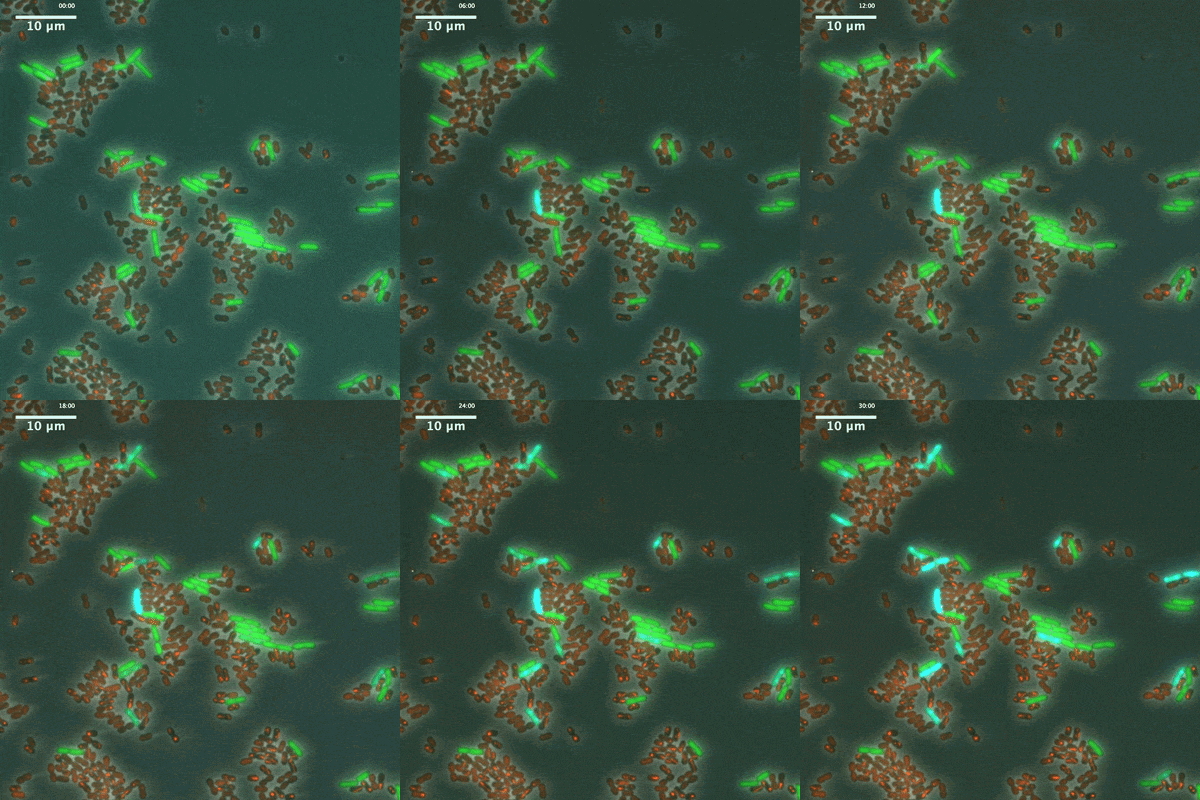
Over the 30m timelapse, we see lots E. coli cells turning cyan (SYTOX+), showing that lipase attacks have critically damaged their cell membranes.
When we look instead at E. coli cells that have adapted to lipase attacks, the rate of permeabilisation is much lower – i.e. we see strong lipase resistance at the single-cell scale:
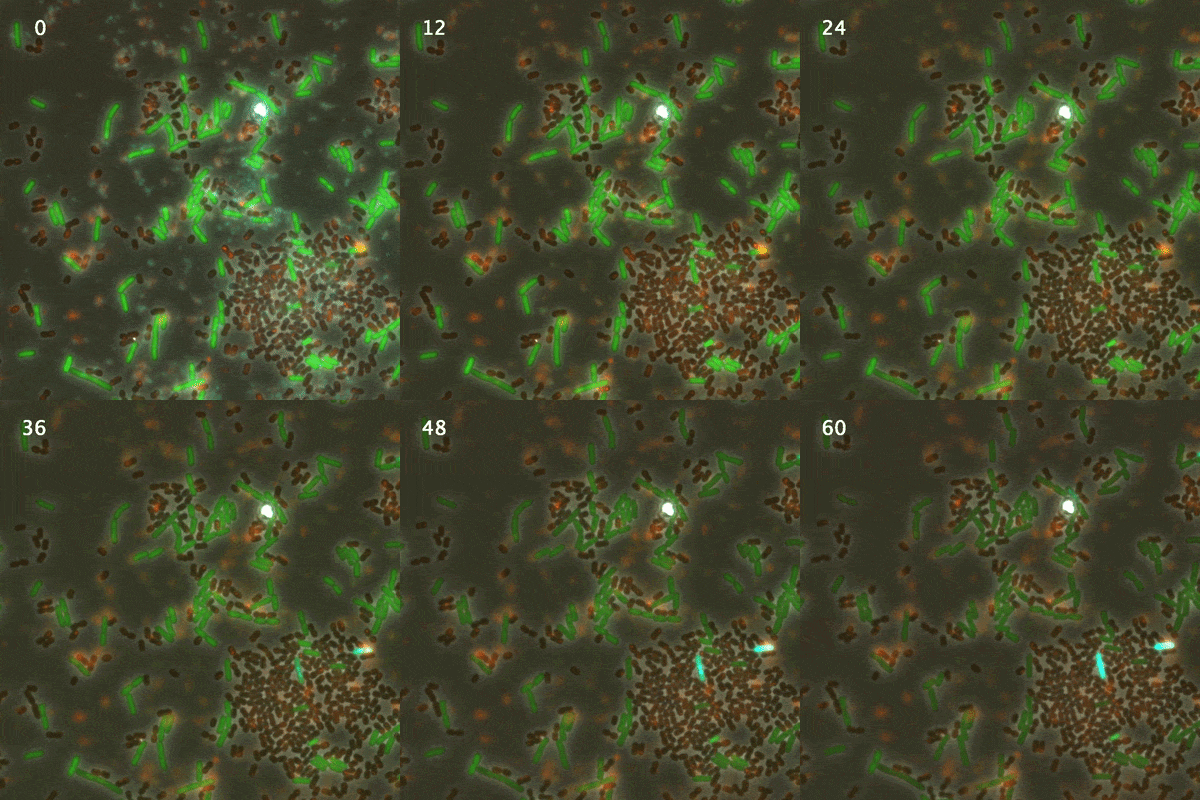
Genetic analyses show that this resistance arises via loss of specific transporters found in the E. coli inner membrane (how?? we still don’t know!).
What’s really cool, however, is that we see resistance trade-offs arising between different types of T6SS toxin. When the lipase-evolved E. coli are confronted with a different toxin, targeting their call wall, they are actually fare worse than the ancestral strain:
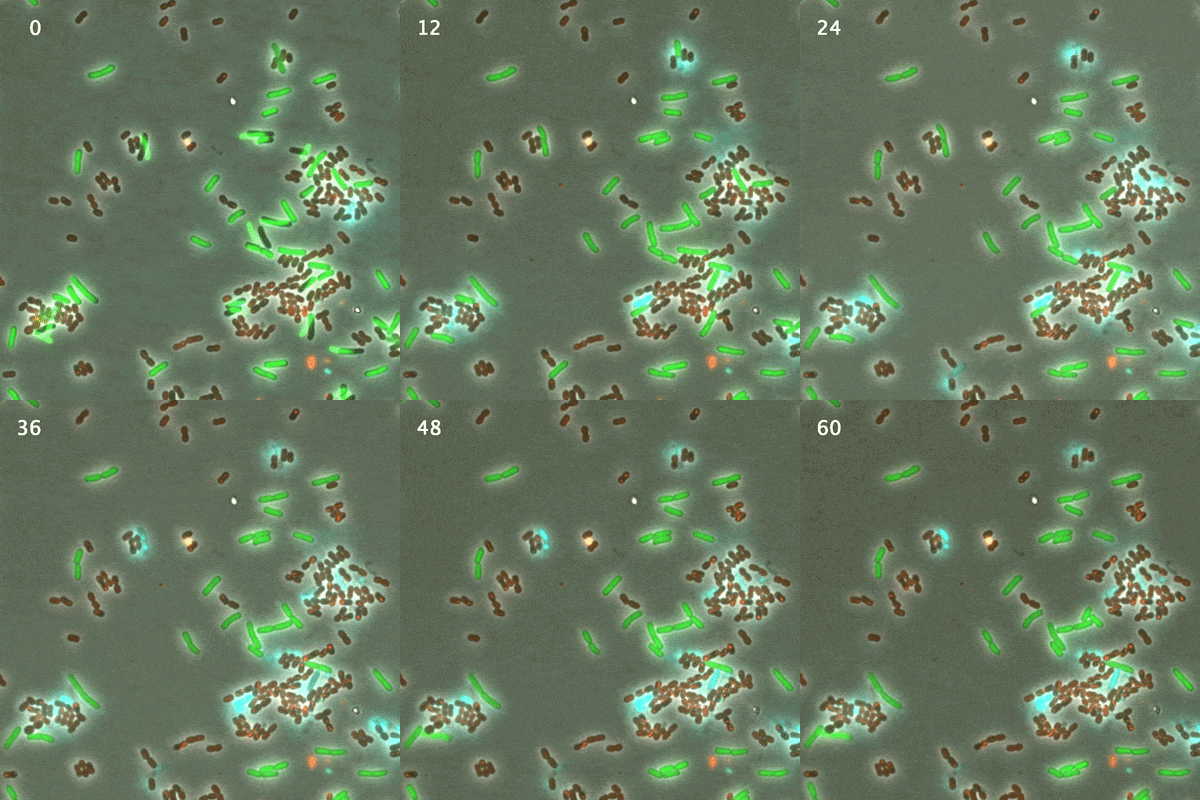
This is just one example, but it highlights a fascinating pattern: evolved resistance against one toxin typically isn’t very helpful against other toxin types. This specificity was a surprising result: past work has shown that there are several ways in which T6SS attacks can be physically blocked (including by slimy biofilm matrices!), which ought to disable any kind of toxin secretion.
The fact that we didn’t we see these “pan-resistance” mechanisms evolve in our E. coli helps to explain why so many gram-negative bacteria continue to use the T6SS, along with diverse toxin arsenals. If pan-resistance were easy, the T6SS wouldn’t be a good weapon, and bacteria would tend to lose it. Instead: toxin-specific resistance appears to be evolutionarily more accessible in our system, enabling attackers to circumvent competitors’ resistances by combining or switching effectors.
 SMITH lab @ Manchester University
Leave a comment